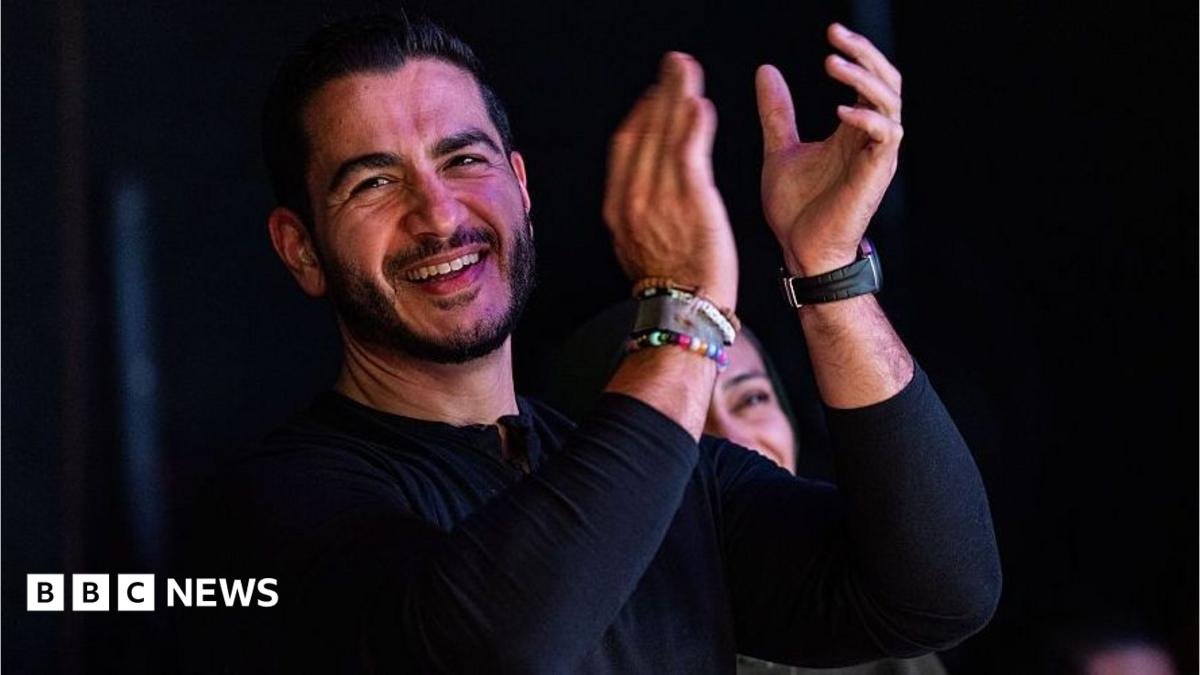
In a stunning victory that has captured national attention, progressive Democrat Abdul El-Sayed has won a pivotal Senate seat in Michigan, becoming the first Muslim senator in United States history. El-Sayed defeated Republican Mike Rogers in a race marked by fierce attacks and intra-party tensions, overcoming baseless claims linking him to terrorism and a high-profile dispute with a fellow Democrat.
A Historic Win
El-Sayed, a former public health administrator, ran on a bold left-wing platform that included universal healthcare and a wealth tax on billionaires. His victory is seen as a milestone for Muslim Americans and a testament to the growing influence of the Democratic left in key battleground states.
The race was closely watched as a test of the political power of progressive policies. El-Sayed's win further solidifies Democratic control of the Senate, following a wave of successes across the country, including in traditionally Republican areas.
Facing Attacks and Overcoming Odds
Throughout the campaign, El-Sayed faced a barrage of attacks, including attempts to portray him as a communist and criticism of his stance on Israel and his Muslim faith. President Donald Trump backed Rogers and echoed these attacks. Despite the negativity, El-Sayed remained unapologetic and unwavering in his positions.
His victory comes just days after his Democratic primary rival, Haley Stevens, endorsed Rogers. The move was widely criticized by Democratic leadership as a betrayal, and Stevens' staff reportedly resigned en masse. El-Sayed, however, downplayed the controversy, telling reporters he doesn't think about Stevens and that none of it matters.
A Campaign of Grassroots Energy
El-Sayed's campaign tapped into grassroots frustration with Washington politics and US ties to Israel. He advocated for getting money out of politics and blamed Trump's policies for raising costs for voters. He campaigned alongside progressive leaders like Senator Bernie Sanders and Representative Alexandria Ocasio-Cortez.
The son of Egyptian immigrants, El-Sayed described Israel's actions in Gaza as genocide and called for an end to US aid to the country, a stance that resonated particularly in Michigan, home to the second-largest Arab-American population in the US.
A Moment of Pride
As El-Sayed took the stage in the early hours of Wednesday morning, supporters erupted in deafening cheers, chanting his name and holding up iPhones to capture the historic moment. Many embraced, moved to tears, and repeated his slogan: 'Money out of politics, money in your pocket and Medicare for all.'
In his victory speech, El-Sayed thanked the crowd for taking a chance on 'the unlikeliest of candidates' and declared that his win was theirs. He also used the Arabic phrase 'Alhamdullah' and playful mocked right-wing critics by explaining it means 'praise be to God.'
For Muslim Americans, the win carries profound significance. Roula Allouch, an Arab American Muslim, told the BBC she had goosebumps. 'I'm proud of Abdul, the campaign that he ran, his family for their perseverance through all the hate, the Islamophobic rhetoric that was thrown at him,' she said. Another supporter said his victory made her feel like she could 'stand a little taller' and know that someone in Washington is fighting for her.
El-Sayed, 42, represents a generation of Arab Americans and Muslims born in the US to immigrant parents and raised in post-9/11 America. His success is seen as a beacon of hope for those who have felt marginalized. As one supporter put it, 'If someone with the name of Abdul can make it, that means this next generation can look up and say that they can too.'
The Michigan Senate seat, previously held by retiring Democrat Gary Peters, was considered one of the tightest races in Tuesday's midterm elections. El-Sayed's victory is not only a personal triumph but also a signal that progressive ideas and diverse candidates can win in crucial swing states.