
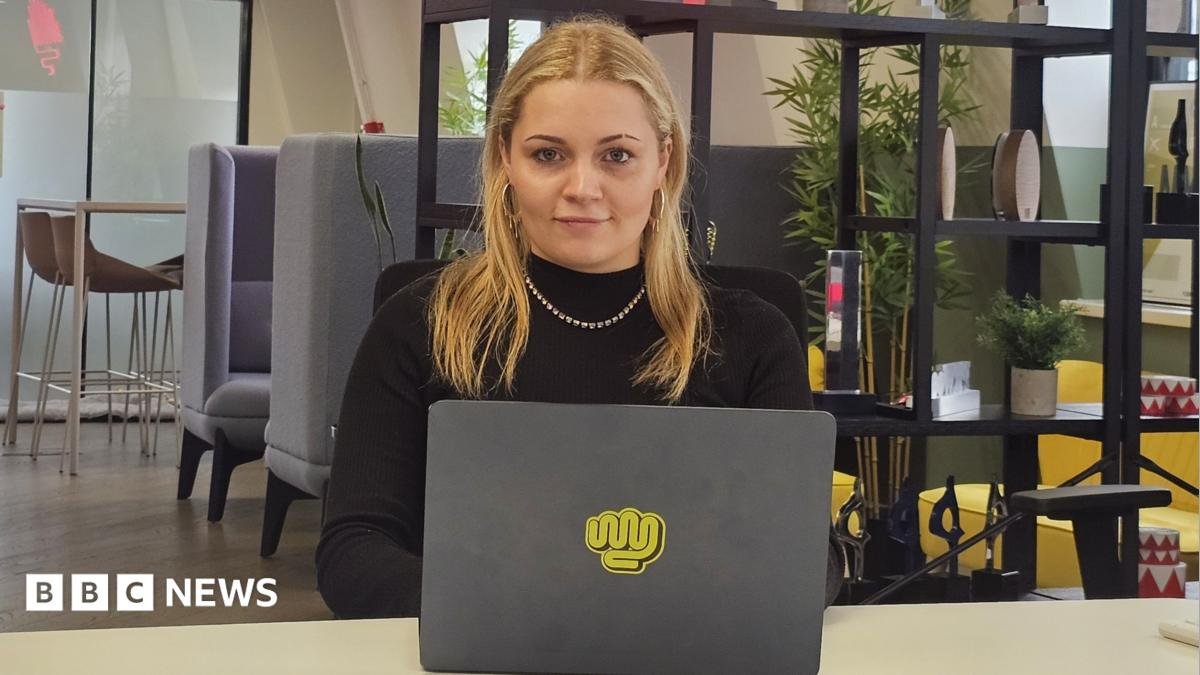
In an era where artificial intelligence is reshaping industries, a new breed of graduates is stepping into roles that put AI at the core of their daily work. Lotte Underwood, 25, is one such professional. Armed with a degree and a master's in marketing, she joined London-based PR agency Fight or Flight in November last year as an 'AI associate'. Her job is a far cry from traditional public relations. Instead of spending her days pitching to media, she manages a team of around 30 AI agents that handle tasks ranging from industry research and client reporting to media interview preparation and image generation.
A significant part of Underwood's role involves overseeing these agents, checking their outputs, and feeding results to colleagues who interact directly with clients and journalists. She also monitors how clients appear in responses from AI tools like ChatGPT, Claude, and Gemini. 'A huge part is being in client meetings and calls to work out what is actually going to be most helpful from these agents,' she says.
Underwood is not alone. Dillan Patel, 24, joined engineering software company Stride as an intern 18 months ago. A business management graduate, he was tasked with developing an internal chatbot to capture the knowledge of a retiring senior staff member. Now an AI automation analyst, Patel builds further internal agents to provide specific information to teams and identifies manual tasks that could be automated. 'My role focuses on finding practical ways to use technology, automation, data and AI to improve how we operate,' says Patel, who is based in Coventry.
The Rise of AI-Specific Graduate Roles
Companies like ArvatoConnect, an outsourced contact centre firm, are actively seeking such AI-savvy graduates. CEO Debra Maxwell says the company's usual graduate intake is on hold this year, but she plans to resume it next year with a stronger emphasis on AI. 'We would be looking for more AI-disruptor type roles, where you can challenge us as an organisation to think more holistically about where AI can be applied and where we could grow our business from,' says Maxwell, who is based in London. 'We see our graduates as not filling administrative roles, but actually adding value to the organisation in a different way.'
Maxwell adds that one recent graduate used AI to conduct deep dives on specific markets, providing valuable information for contract bids. 'It's basically giving him a more rounded role.' If AI can make a graduate job more integral to the organisation, Maxwell argues, companies can foster a more loyal and engaged workforce that contributes meaningfully much earlier.
Research from consultancy PwC supports this shift. For its 2026 AI Jobs Barometer, PwC analysed 2.4 million entry-level jobs in the US and found that roles most influenced by AI are now seven times more likely to require traditionally senior-level skills such as motivational leadership, strategic decision-making, and team building. These higher-expectation entry-level roles have grown 35% since 2019, while other entry-level roles shrank by 10%.
Feeling Less Like a Graduate, More Like an Equal
Cian Clinton, 23, joined consultancy Valliance last September after earning a Bachelor of Science in 2024. He uses around ten AI agents daily for various tasks and says AI makes him feel less like a graduate and more like an equal team member. 'Your ideas and your creativity are a lot more valued because you actually get to implement those firsthand, and the responsibility you take on is a lot greater because of that,' says Clinton, who is based in London. 'I am now taking on responsibilities which would usually take me four or five years to get to.' He believes his career progression will be faster as a result. 'AI is killing the pyramid approach… progression is no longer based on your knowledge bank. Now it's more based on your critical thinking and understanding of the processes,' he says.
However, there is a growing concern: are these graduates becoming too AI-centric? Underwood admits she would like to pick up traditional PR skills that her current role does not focus on. 'There's certain things that I haven't had the chance to do yet, like directly pitching to the media. I absolutely plan to do this,' she says, expressing confidence in her future within the agency's expanding AI team.
Simon Pratt, chief operating officer at Portman Finance Group, sees overemphasis on AI as a potential issue. He acknowledges the importance of using AI effectively, but stresses that the company's two-year graduate programme is fully centred on 'learning the trade'. 'Our graduates rotate across four areas at six-month intervals, working directly alongside senior relationship managers to learn their trade,' explains Pratt, who is based in Northampton. 'They'll learn all of our financial products, how to draft credit papers for submission to lenders, and how to build meaningful relationships with our customers. They'll progress to running transactions from start to finish.'
Claire Reed, PwC UK's chief technology and innovation officer, believes that graduate roles heavily focused on AI may not provide long-term career progression. 'There will be no graduate job now that doesn't require a baseline of AI literacy,' says Reed, who is based in Glasgow. 'But AI skills on their own are not going to help you in your career. You've got to couple that with that sector knowledge of what that client actually wants.'
Back in Coventry, Dillan Patel is confident that his AI work will remain valuable and wants to continue building on it. 'I don't think I'd want to explore different positions within the business. Through my involvement in AI-related projects, I already work closely with different areas of the business and I'm gaining valuable knowledge and experience along the way,' he says.