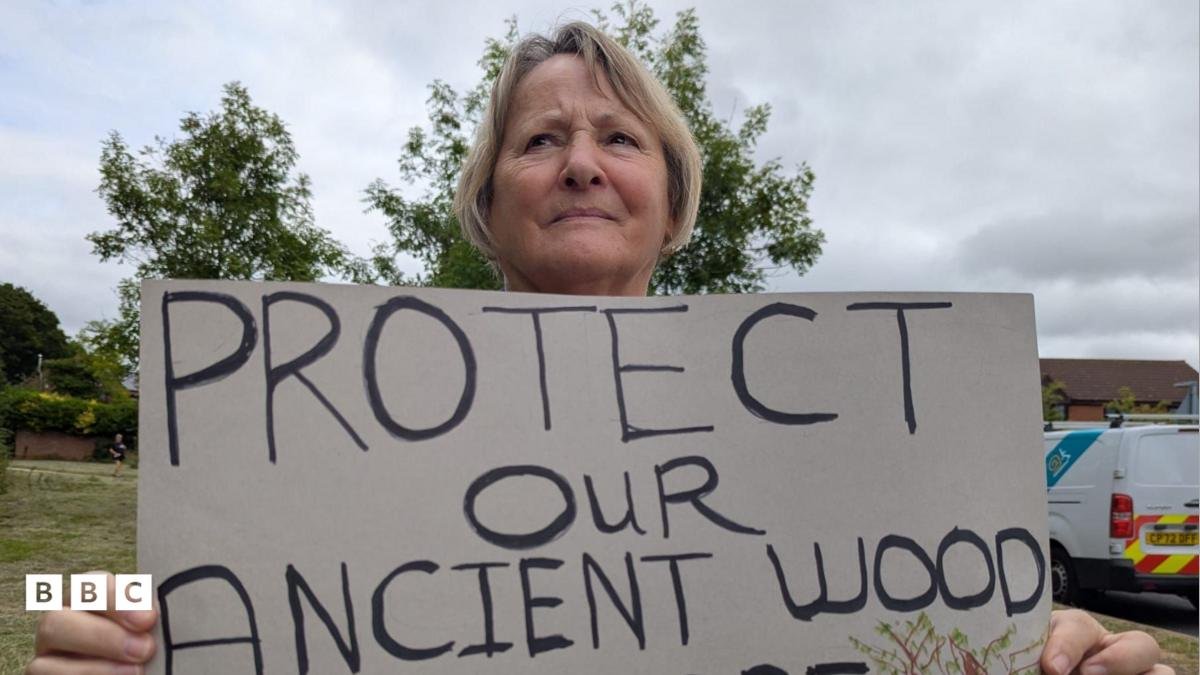
Campaigners are warning that England's ancient woodlands are increasingly at risk from the government's ambitious housing targets, despite existing protections. The Labour government's pledge to build 1.5 million new homes by 2029, coupled with the introduction of the "grey belt" policy, has raised fears that these irreplaceable habitats could be lost to development.
Protections Under Pressure
Ancient woodlands, defined as areas that have been continuously wooded since at least 1600, are considered some of the UK's richest wildlife habitats. Current planning policy states that development should only occur in "wholly exceptional circumstances," such as major infrastructure projects. However, campaigners argue that the pressure to meet housing targets is weakening these safeguards.
Lucy Graebe-Watson, chair of Ancient Woodland UK, said: "We are already seeing cases where the existing protections are struggling. We have seen a rise in concerns and alerts from local groups since recent planning reforms." She added that the grey belt policy, which allows building on poorer quality green belt land, makes it more likely that areas adjacent to ancient woodlands could be developed.
The BBC has identified dozens of sites where planned developments are located immediately next to ancient woods. Among them is Hook Wood in Gillingham, Kent, where 450 homes have been approved within yards of the woodland, prompting fears for local wildlife.
Community Resistance
In Derby, more than 1,500 people have objected to plans for approximately 150 houses bordering Chaddesden Wood Nature Reserve. Helen Cherry, who has lived nearby for 40 years, said: "The wood is at least 400 years old, with mature hazel and oak trees. Building to the edge would leave the site closed on all sides, making a mockery of the nature reserve." The plans were refused by Derby City Council in 2025, but residents fear the developer, JGP Properties Limited, may return with amended proposals. The company said its assessments showed "no loss or deterioration of the ancient woodland and veteran trees."
Similar concerns have been raised in South Yorkshire, where a 130-home development is proposed on land surrounding Gelster Wood. More than 2,000 people have backed the Preserve Littleworth Lane campaign group. Gary Cantrill, a local beekeeper and member of the group, said: "People feel our village is being treated as an easy target for developers who don't care about our community or our heritage. This isn't just an empty plot. It's 350-year-old historic farmland." He also warned that concreting over the land would increase flood risk.
Ecological Concerns
Ecological consultant Matt Shardlow, who is working with the campaign, explained that damage to ancient woodlands can occur even if trees are not removed. "Roots extending away from the sites could be damaged by development, while drainage for nearby new housing could dry out certain tree species and pollute their water supplies," he said. Noise and light pollution could also drive sensitive species out of the woods, and even pet cats could affect ground-nesting birds and bats.
The Royal Society for the Protection of Birds (RSPB) acknowledged that protections for irreplaceable habitats have improved under recent changes to the National Planning Policy Framework (NPPF). However, Carl Bunnage, head of nature policy at the RSPB, argued they remain inadequate. He said the "wholly exceptional circumstances" clause represents a loophole for developers, especially in areas with housing shortages. "If we can give the strongest protections to built heritage features such as historic buildings, then why shouldn't we also be giving the strongest protections to those habitats?" he asked.
A spokesperson for the Ministry of Housing, Communities and Local Government said ancient woodlands continue to benefit from "very clear and strong protections." They added that national planning rules explicitly state developments causing loss or deterioration of ancient woodland should be refused, with very limited exceptions for nationally significant infrastructure projects, where compensation measures would be required. A revised NPPF published in August contains clearer policies for assessing proposals affecting irreplaceable habitats.
As the demand for housing grows, the tension between development and conservation is set to intensify, with campaigners vowing to continue their fight to protect these ancient landscapes.