
Seven passenger planes across Europe, including two that departed from the UK, underwent security inspections on Tuesday following a series of suspected bomb threats, authorities said. The incidents caused disruptions at several airports but no explosives were found.
Flights Searched in Rome, Warsaw, and Beyond
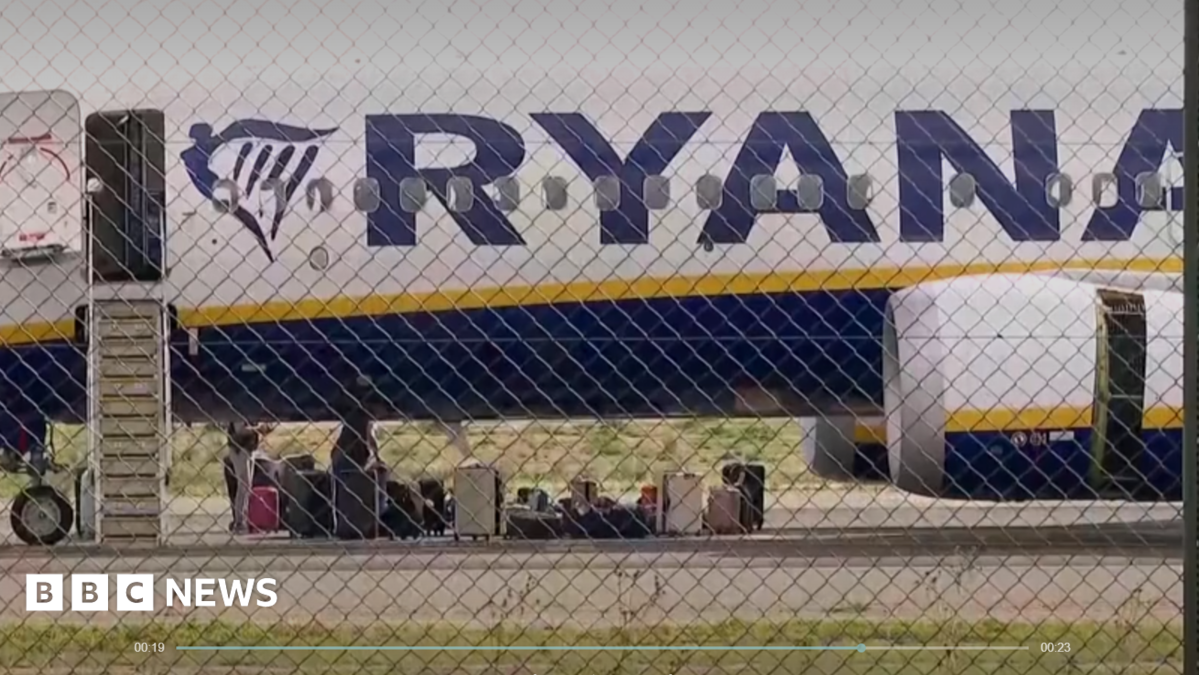
Two Ryanair flights, one from Dublin and another from Lisbon, were searched after landing at Rome's Fiumicino airport. Sources at the airport told the BBC that the Dublin flight was escorted by the Italian Air Force until it landed. Police bomb disposal experts carried out standard security protocols, and inspections of passengers, luggage, and the aircraft yielded negative results. The alert was subsequently cleared.
In Poland, two flights heading to Warsaw were affected. A flight from London Heathrow, originally bound for Warsaw Chopin airport, was diverted to the smaller Modlin airport, briefly forcing its closure. A Scandinavian Airlines flight from Copenhagen to Warsaw Chopin landed as planned, but was also inspected.
In Spain, a Ryanair flight from Manchester to Murcia was searched and found to have no explosives on board, according to Spanish authorities. One passenger on that flight, Sarah, told BBC Radio 5 Live that she was unaware of the threat until after landing. "We weren't told anything during the flight," she said. "The plane stopped quite suddenly and then we were kept on the runway for around 30 minutes. Then the fire engines turned up, the bomb squad turned up and we were asked to evacuate."
Bulgaria's Transport Minister Georgi Peev said there were bomb threats against two planes traveling to Sofia, one from Bergamo, Italy, and another from Dublin. The flights were not diverted, and no explosives were found after checks. Bulgaria's border police said they received an email about an improvised explosive device on the Bergamo flight, and standard procedures were immediately activated.
Coordinated or Coincidental?
While there is officially no link between the incidents, authorities from various countries are cooperating to assess whether this was a coordinated attack designed to disrupt airspace. The UK government described the incidents as "malicious hoax threats" and emphasized that it has "one of the most robust aviation security systems in the world."
Aviation security expert Paul Mason told the BBC that bomb threats on passenger planes "don't happen that frequently," making the latest incidents "unusual." He noted that the threats appeared to be made in a credible manner across a broad range of airlines, suggesting a deliberate act rather than coincidental malicious calls.
Marco Chan, a former pilot and aviation lecturer at Kingston University, said a bomb threat is considered "genuine until it is resolved, even though most turn out to be hoaxes." Crews will quietly search toilets, galleys, and storage areas, and will not touch a suspicious item unless necessary. Once on the ground, the plane is typically taken to an isolated stand, passengers are disembarked, and police and bomb disposal teams search the aircraft.
The incidents come a day after a Wizz Air flight from London Luton made an emergency landing in Budapest, escorted by a Hungarian fighter jet, following a bomb threat. Wizz Air later said security checks were made and nothing was found.
Authorities continue to investigate the string of threats, which have raised concerns about aviation security and the potential for deliberate disruption to European airspace.