
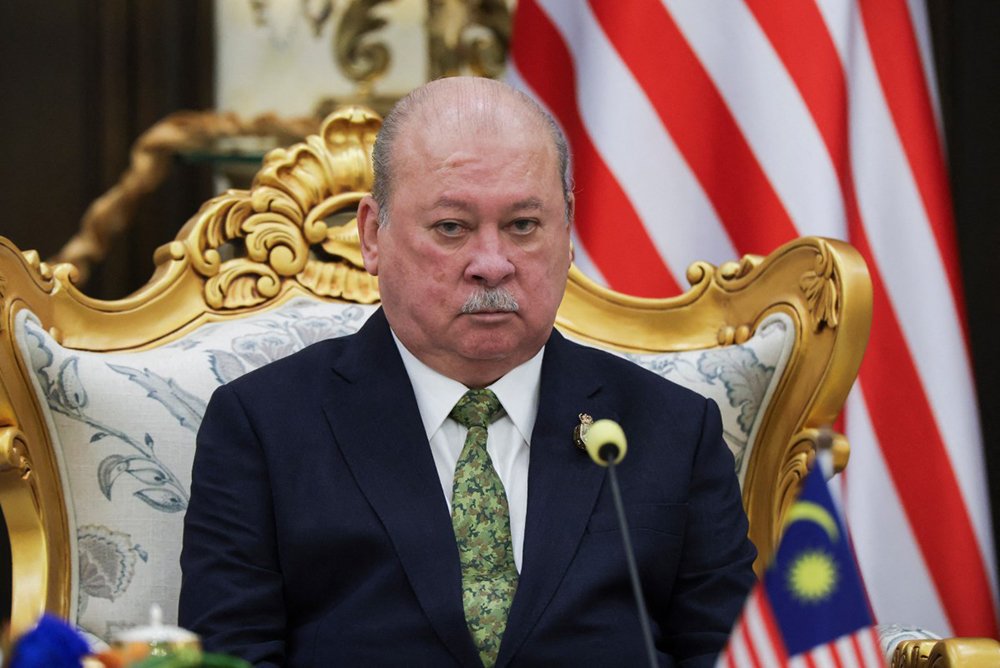
Malaysia's King Sultan Ibrahim has publicly rebuked the attorney general for delaying the release of former Prime Minister Najib Razak from prison, stating that the royal pardon granted to Najib is clear and unambiguous. The 73-year-old Najib was convicted in connection with the massive looting of 1MDB, a sovereign wealth fund, and was granted a conditional pardon in September that would allow him to serve the remainder of his sentence under house arrest after paying a $12 million fine.
On Friday, the attorney general's office blocked Najib's transfer to house arrest, claiming it needed further clarification on the pardon. This move prompted the King to issue a statement on Saturday asserting that there is no confusion in the interpretation of the pardon order. "There should be no confusion in interpretation," King Ibrahim said, emphasizing that the pardon is not linked to any other cases against the former leader. He added, "Given that all conditions in the conditional pardon order have been fulfilled, any argument questioning the order leads towards denying the order of His Majesty the King."
Najib's legal team expressed gratitude to the monarch, stating that there is "no basis" for authorities to keep Najib imprisoned "a moment longer." The former prime minister's home in Kuala Lumpur has been a focal point of media attention, with supporters and journalists gathering outside as the legal drama unfolds.
Background of the 1MDB Scandal
The 1MDB scandal, described as one of the largest global financial frauds, involved the embezzlement of billions of dollars from the state fund. Najib, who served as prime minister from 2009 to 2018, was found guilty of abuse of power, money laundering, and criminal breach of trust. He was sentenced to 12 years in prison and fined nearly $50 million. However, the conditional pardon, granted by the King in September, reduced his sentence and allowed for house arrest upon payment of the fine.
The attorney general's decision to seek clarification has raised questions about the separation of powers and the authority of the royal pardon. Legal experts suggest that the attorney general's office may be interpreting the pardon order differently, but the King's statement leaves little room for doubt. The palace's intervention underscores the tension between the monarchy and the government in Malaysia's constitutional framework.
Political Implications
This development is likely to have significant political ramifications. Najib's release could inflame public opinion, given the widespread anger over the 1MDB scandal. The King's stance may also test the relationship between the royal institution and the government led by Prime Minister Anwar Ibrahim, who has pledged to combat corruption. The attorney general's office has not yet responded to the King's statement, and it remains to be seen whether Najib will be transferred to house arrest imminently.
As the nation watches, the case highlights the delicate balance between royal prerogative and legal process. For now, Najib remains in prison, but the King's unequivocal message suggests that his release may be imminent. The world will be watching how Malaysia navigates this constitutional crisis, which pits the monarchy against the attorney general's office in a high-stakes showdown.