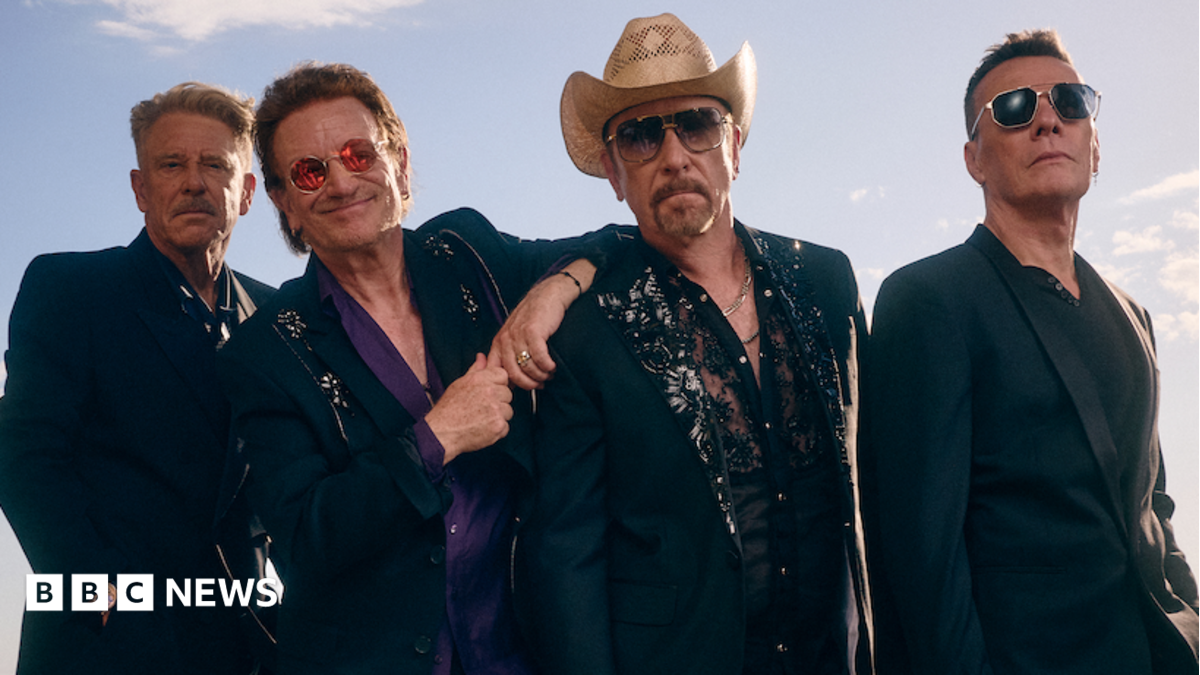
U2 have never been a band to shy away from a challenge, but their latest project might be their most ambitious yet. In 2026, the Irish rock legends released two EPs, Days of Ash and Easter Lily, followed by a full album, Carnaval de Luz. The trilogy showcases a band still at the peak of their creative powers, driven by instinct and a refusal to play it safe.
Instinct Over Overthinking
U2's greatest hits often emerge from raw emotion or sudden inspiration, as seen in anthems like Pride (In the Name of Love) and One. When they overthink, they stumble, as drummer Larry Mullen Jr. admits about their 2006 single Get On Your Boots, calling it "a catastrophic choice." So when they rushed out two EPs at the start of 2026, it felt like a return to form. Days of Ash tackled urgent issues, including the shooting of US citizen Renee Good by an ICE officer and the death of Palestinian activist Odeh Hathaleenm. The follow-up, Easter Lily, took a more reflective turn, questioning whether faith and friendship can sustain us in turbulent times.
"We put those EPs out without telling anyone," Bono recalls. "Our management, our label, they all said, 'You can't do that, people won't notice.' And we said, 'We don't mind. It's okay not to have a big hype behind everything.' And it was really beautiful. The people who we wanted to notice, noticed."
That approach marks a shift for a band who once forced their album Songs of Innocence into 500 million iTunes libraries, an act of overreach Bono has since apologized for. Their new album, Carnaval de Luz, is getting a more traditional rollout, but the focus remains on the music. Inspired by joyous festival nights, the album rejects anxiety in favor of what Bono calls "defiant joy." Tracks like If The World Is at War, We Better Not Be and Superficiality exude optimism, with Bono affirming that "the news can't break us."
A Final Duet with Dolly Parton
The album's closing track, Torn, features a duet with country legend Dolly Parton, which became her last-ever recording. To persuade Parton, Bono sent her a set of bagpipes for her birthday. Intrigued, she agreed to listen to his demos. "We had some folk songs we were playing, there was one called Lifelong, and I remember her saying, 'You know, that's a little too Irish for me,'" Bono recalls. "So she said, 'Look, I've started a song called Torn. You can take it where you want, and I might like where you take it.'"
Parton's original lyric was about a woman choosing between two men, but U2, with help from Snow Patrol's Jonny McDaid, rewrote it to address political divisions tearing families apart. The result is a poignant reflection on a fractured world. Parton recorded her parts in June, less than three months before she died. "We knew she was ill, but we had no idea that it'd be her last vocal," Bono says. "That was a real shock. A shock for us because we'd been working with her, but a shock for anyone who loves music. I remember I was with Michael Stipe in a car when the news came in, and he actually fell down and started sobbing. He just could not believe it. Probably the only thing that people can agree on in the entire world right now is Dolly Parton. Whether you're gay or straight or conservative or liberal, she was ready for you to fly at her show."
The Relentless Pursuit of Perfection
Another female presence shines on The Mirror Maker, a track dedicated to Catalan superstar Rosalía. Written after witnessing her spellbinding Lux tour, Bono describes the song as capturing "the re-enchantment of the world." He wrote it without her knowledge, then phoned her to seek approval. "It could have been excruciating if she really, really hated it," he grimaces. "I'd have had to pretend it was about Santa Rosalia, a saint who lived in a cave in Italy in the 17th Century."
According to producer Jacknife Lee, The Mirror Maker went through 196 different takes before U2 were satisfied, proving they haven't lost their perfectionist streak. "The early sessions for this album were at times super inspiring, and then really not that good at all," admits The Edge, citing a stubborn "stick-with-it-ness" that keeps them going. "This band is absolutely relentless," Bono agrees. "It's a grudge match." Mullen Jr. adds, "It's the most frustrating thing. I'm always reminded of how incapable I am of doing all those things that other people find easy. It's always been a challenge for us, and that's what makes those moments when it works so special. That's why you keep on chasing it, and why you stay in a band."
50 Years and Counting
U2's longevity is remarkable not just for their musical output but for their enduring friendship. The lineup has remained unchanged since they formed at Dublin's Mount Temple Comprehensive School 50 years ago. When we meet in a bingo hall that hosted some of their formative gigs, there's a familial vibe. They tease Mullen Jr. for turning a hose on fans who climbed the wall of his parents' house in 1976 and chat animatedly about their musical obsessions. "Every four-piece wants to be the Beatles," Bono confesses.
Those bonds have carried them through commercial and critical ups and downs, as well as life-altering injuries. Bono was forced to cancel a 2010 US tour after a back injury, and Mullen Jr. skipped their 2023-2024 Las Vegas residency due to neck problems. Doctors advised him to retire, but after risky surgery, he's back behind the kit, developing a new playing style to avoid further damage. His determination will be tested next year when U2 embark on a massive international stadium tour, including two UK dates at London's Tottenham Hotspur Stadium.
Speaking Truth to Power
The band's commitment to free speech remains unwavering. When asked about the controversy surrounding Ed Sheeran's recent US tour, where venue owners pressured him to drop support act Macklemore for making pro-Palestinian comments, The Edge says, "We totally support Macklemore's right as an artist to say what he wanted to say. I don't think Ed should be vilified. He was in a very difficult situation. But I commend the other young artists who decided to leave his tour. They were sticking up for an artist's right to free speech, and I think that's the issue above anything else."
He recalls U2's own risky political statements, such as when Bono faced death threats in 1987 for playing Pride (In the Name of Love) in Arizona after the governor banned Martin Luther King Day. "I looked up at the end of the verse and I clearly wasn't dead," Bono later told Mojo. "But not only that... Adam Clayton was standing in front of me." Similarly, in 1998, U2 taunted Chilean dictator Augusto Pinochet during a televised concert in Santiago, inviting the mothers of victims of his coup on stage to say their children's names. "It would have been way smarter and better for us to shut up," The Edge admits. "But it was artistically necessary, and we just said, 'We can't not do this.'"
Reflecting on the Macklemore controversy, he adds, "We might disagree with some of the members of the pro-Palestine movement, but we absolutely agree with the fundamentals. We absolutely agree that what's going on in Gaza is unconscionable and that a child's life is equally valuable, no matter what their background."
Mullen Jr. is equally forthright: "We, as a band, will fight for the right to speak your mind, as long as it doesn't incite violence. Even if we disagree with it or don't like it, nobody - no billionaire, no promoter, no owner - has the right to censor anybody. And they will definitely not be censoring us, ever."
Like we said: U2 are at their best when they trust their instincts.