
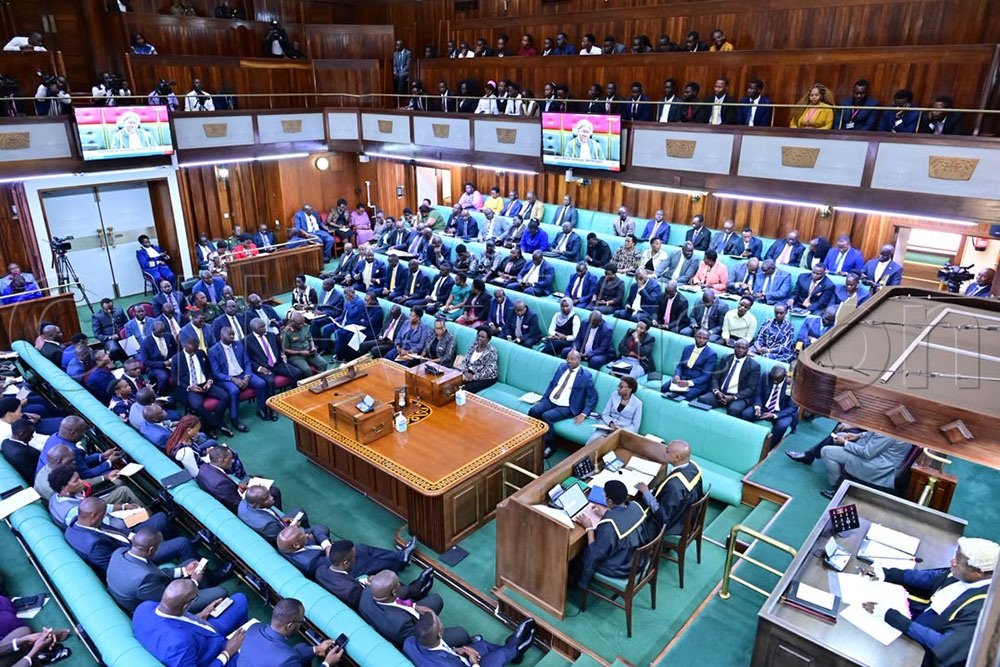
KAMPALA - Uganda's Parliament has raised serious concerns over the limited economic returns from billions of shillings invested in science, technology, and innovation, citing stalled projects and a failure to commercialize locally developed technologies.
The concerns stem from a report by Parliament's Committee on Science, Technology and Innovation, which revealed that several government-funded projects have absorbed substantial public resources over multiple years without achieving their intended commercial objectives.
PIBID: A Case of Stunted Growth
One of the most glaring examples is the Presidential Initiative on Banana Industrial Development (PIBID), which has received sh311 billion in government funding over two decades but generated only sh15.55 billion in revenue. The project still faces an operational funding gap of sh67 billion and requires an additional sh1.2 trillion to reach full commercialization.
Kole South MP Henry Boniface Okot expressed disbelief that PIBID remains in the pilot stage after 20 years despite the massive investment. "It is unacceptable for the Presidential Initiative on Banana Industrial Development to be under pilot for 20 years," Okot told Parliament. He also raised concerns about the management of the innovation subsector, noting that the Science, Technology and Innovation Secretariat has only 24 of its 151 approved positions filled, a mere 15.9% staffing level. With 141 projects under the subsector, Okot argued that the shortage undermines effective supervision and proposed that the government pause new projects until it can adequately monitor existing ones.
Kira Motors: A Different Perspective
The committee's report also flagged Kira Motors Corporation, which has received cumulative government funding of sh223 billion since its establishment in 2014 but continues to rely on public financing. However, some MPs cautioned against judging innovation projects solely on their current financial returns, emphasizing that successful technologies require sustained investment and support to reach commercial production.
Kitgum Municipality MP Denis Oneka Lit Amere noted that Kira Motors has made significant progress since its early development at Makerere University and deserved further support. He pointed to the electric buses already operating on Kampala's streets as evidence of the potential of locally developed technology. "Such an invention really needs to be supported under science and technology. We need to give it more resources to really boost it up to help develop the economy of this country," Oneka said. He also called for prioritizing institutions like the Uganda Industrial Research Institute (UIRI), arguing that their work in manufacturing and reverse engineering could reduce Uganda's dependence on imported products.
Local Innovators Demand Attention
Beyond the large government-backed projects, MPs questioned whether Uganda's innovation funding is reaching talented young people and small-scale innovators across the country. Solomon Silwany, the Bukhooli County Central MP, said the report had not adequately captured the challenges facing innovators in rural communities, including talented schoolchildren and young people developing practical technologies.
The debate highlights the need for a balanced approach that ensures accountability while nurturing innovation. As Uganda strives to become a knowledge-based economy, Parliament's scrutiny serves as a critical checkpoint to ensure that public funds are used effectively to drive sustainable development.