
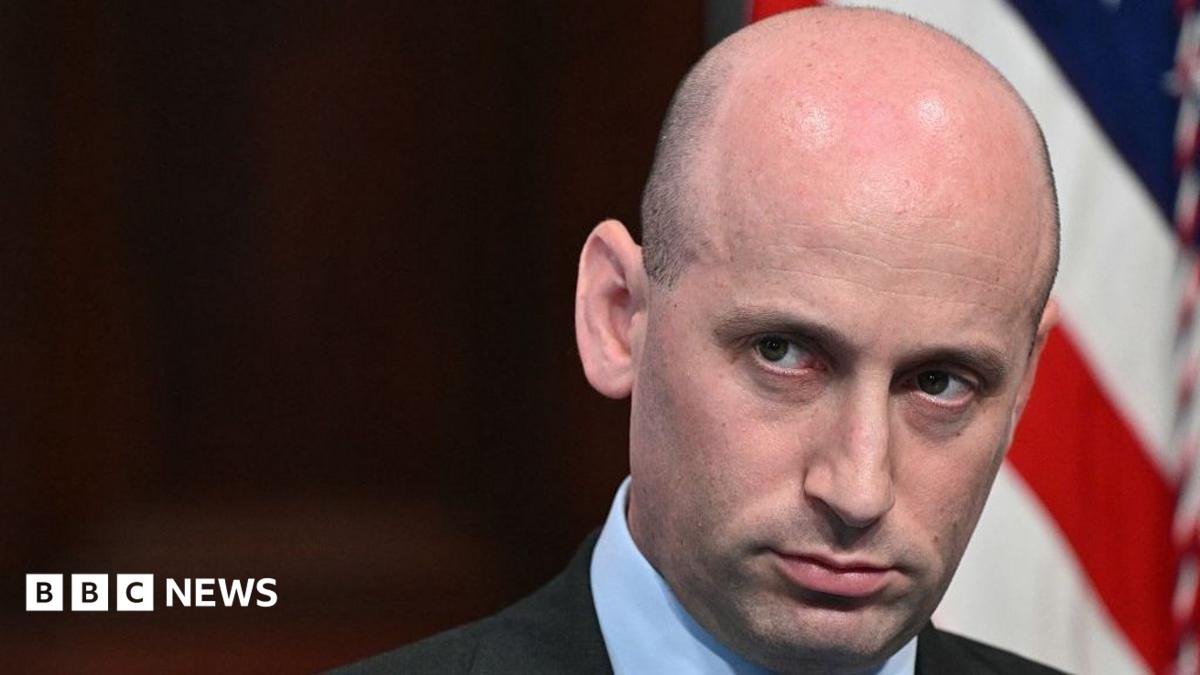
In a move that underscores a shift toward confrontation, President Donald Trump has named Stephen Miller, his longtime adviser and immigration hardliner, as the new White House chief of staff. The appointment comes just days after Republicans suffered significant losses in the midterm elections, dimming hopes for bipartisan cooperation.
A Bruising Political Operative Takes the Helm
Miller, who has been a loyal confidant since Trump's 2016 campaign, is known for his aggressive stance on immigration and his willingness to engage in political combat. His promotion to the top staff position in the White House suggests that Trump is preparing for a series of battles with the newly empowered Democratic Congress.
In a post on X, Miller said he was "honored beyond words" and vowed to "fight with all of our soul to support our president and defend this magnificent republic." The chief of staff role is one of the most influential in Washington, responsible for managing the president's schedule, setting the agenda, and negotiating with Congress.
Trump praised Miller's long service, telling reporters, "Stephen Miller's been with me since the beginning. He gets it." The president announced the decision on his Truth Social platform.
Architect of Controversial Policies
Miller is best known for driving the administration's tough immigration enforcement policies, which have included increased funding for enforcement operations and high-profile deportation efforts. He has also been a leading voice in military actions in Venezuela and against suspected drug trafficking in the Caribbean and eastern Pacific, moves that critics have labeled extrajudicial killings.
His rhetoric has often sparked controversy. He once called Alex Pretti, who was shot and killed by federal immigration officials during a deportation operation in Minneapolis, a "domestic terrorist" and an "assassin," though he later walked back those comments, acknowledging that federal agents "may not have been following" proper protocol.
Miller's combative style has made him a lightning rod for criticism. Democratic House leader Hakeem Jeffries wrote on X that Miller is a "dangerous xenophobe and reckless extremist who has American blood on his hands" and called for his removal from government. Such sentiments are shared by some Republicans as well. Senator Thom Tillis of North Carolina has called Miller "incompetent" and "the architect of some of the dumbest proposals from the Trump White House."
A Contrast to His Predecessor
Miller replaces Susie Wiles, who co-managed Trump's successful 2024 re-election campaign and was seen as a steadying influence in an often chaotic White House. Wiles had avoided the staffing upheavals and personality clashes that marked Trump's first term, but her standing with the president reportedly eroded in recent months as his political fortunes declined, culminating in Tuesday's electoral losses.
Trump was said to be irritated by news stories suggesting that those in Wiles' orbit were capitalizing on their connections to secure lucrative consulting jobs. Her departure and Miller's ascent mark a clear shift in tone and strategy.
Challenges Ahead
Miller's new role will require him to work with a Congress that includes newly elected Democrats, such as James Talarico of Texas, whom Miller had previously targeted with a social media post labeling him "their first transgender Senate candidate." The Democratic Party responded with a terse, expletive-laced retort.
The midterm elections saw 58% of voters say the administration's immigration enforcement actions had "gone too far," and Hispanic voters turned decisively against Republican candidates. In the wake of the losses, Vice President JD Vance, an early frontrunner for the 2028 Republican nomination, suggested openness to changing enforcement tactics, such as focusing more on businesses that hire undocumented workers. But with Miller at the helm, such a shift seems unlikely.
Senator Mike Lee of Utah praised Miller as a "true conservative warrior" and "staunch defender of law and order," highlighting the admiration he enjoys among the party's hardline base. As Democrats promise new investigations and oversight, Trump appears to be signaling that he wants a fighter by his side, not a negotiator.
With Miller's appointment, the White House is poised for a more aggressive posture, setting the stage for contentious battles ahead.